
Category: Ingredient Research | Est. read time: 5–6 min
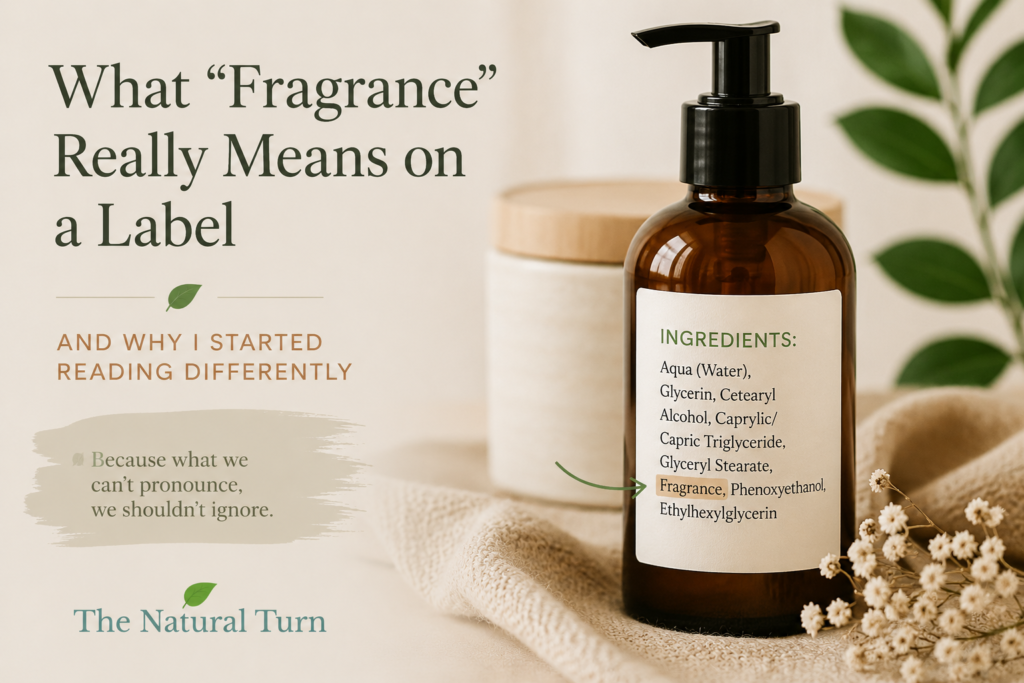
If you’ve ever flipped over a bottle of lotion, dish soap, or shampoo and seen the word fragrance sitting quietly near the bottom of the ingredient list, you’ve encountered one of the most consequential words in consumer products.
It looks harmless. It reads like a finish, like the company just added a pleasant scent and moved on. But that single word can represent dozens, sometimes hundreds, of undisclosed chemical compounds. And for families dealing with recurring skin sensitivity, it’s often the first place worth looking.
This was one of the first things I started researching when my family kept experiencing irritation that didn’t have an obvious cause. I wasn’t looking for a villain or a cure. I just wanted to understand what we were actually putting on our skin every day.
Here’s what I found.
Why “Fragrance” Is a Category, Not an Ingredient
In the U.S., the FDA requires cosmetics and personal care products to list their ingredients, but fragrance is treated as a trade secret. That means a manufacturer can list “fragrance” as a single ingredient without disclosing what’s actually inside it.
The International Fragrance Association (IFRA) maintains a list of thousands of materials used in fragrance compounds. Not all of them are harmful, and many are considered safe at low concentrations. But the catch is: you don’t know which ones are in your product, at what levels, or how they interact with other ingredients in that same formula.
For most people, this is a non-issue. But for anyone with sensitive skin, allergies, eczema, or reactivity to specific compounds, “fragrance” is essentially a blind spot on every label.
Common Culprits Within Fragrance Blends
Research and dermatology literature point to certain fragrance components that are more frequently associated with contact dermatitis and skin reactions:
- Linalool and linalool hydroperoxide: Linalool itself is commonly derived from lavender and is widely used. The issue is that when linalool oxidizes (which happens with air exposure), it can become a sensitizer. This is worth noting because “natural” doesn’t automatically mean non-reactive.
- Limonene: Found in citrus-derived fragrances, and similarly prone to oxidation and sensitization over time.
- Cinnamal and cinnamyl alcohol: Frequently flagged in patch testing for allergic contact dermatitis.
- Eugenol: Naturally present in clove and cinnamon oils, and a known sensitizer for some individuals.
- Isoeugenol: Structurally similar to eugenol, and among the fragrance allergens required to be disclosed on labels in the EU.
This doesn’t mean every product containing these compounds will cause a reaction. It means that if you’re dealing with unexplained irritation, these are worth paying attention to.
The EU vs. U.S. Disclosure Gap
One thing that reframed how I think about product research: the European Union requires that 26 specific fragrance allergens be individually listed on cosmetic labels if they exceed certain concentration thresholds. The U.S. has no equivalent rule.
That means the same product sold in Europe may have a more detailed label than the version sold here. This isn’t a reason for alarm; it’s just a reminder that “compliant with labeling laws” and “fully disclosed” are not the same thing, and that doing your own research has real value.
What I Actually Do Now
I’m not fragrance-free across the board; that’s not realistic for my household, and frankly, some products with fragrance haven’t caused any issues for us. But I’ve changed how I evaluate fragrance in products:
- I prioritize products that disclose their fragrance components, even partially. Some brands are starting to do this voluntarily. It’s a meaningful signal about how they think about their customers.
- I pay attention to product format. A fragrance in a rinse-off product (like shampoo) has less prolonged skin contact than a fragrance in a leave-on lotion or laundry detergent that sits against your skin all day.
- I use EWG’s Skin Deep database and the Think Dirty app as starting points, not final verdicts. They have limitations, but they’ve helped me notice ingredient patterns across products I was already using.
- I look for “fragrance-free” over “unscented.” Unscented can still contain masking fragrances designed to neutralize odor. Fragrance-free means none were added.
The Honest Bottom Line
Fragrance in products is not inherently dangerous. But the lack of transparency around it means you can’t make a fully informed choice, and that’s the part worth pushing back on.
If you’ve been dealing with skin sensitivity and haven’t looked at fragrance yet, it’s a reasonable place to start. Not because it’s definitely the cause, but because it’s one of the few ingredient categories where the label is deliberately telling you less than it could.
That’s the kind of gap this site exists to fill.
Nothing on this site is medical advice. If you’re dealing with ongoing skin issues, a dermatologist or allergist, particularly one who does patch testing, is the right resource.